How To Stay Calm Under Pressure In Golf

Recently Updated
How To Stay Calm Under Pressure In Golf
Pressure is part of golf. Whether you are standing over a short putt, trying to break 90, or protecting a good round, your mind can affect your swing, decisions, and confidence.
This guide explains how to stay calm under pressure in golf using simple mental routines, smarter decisions, breathing control, and post-round reflection.
Check Current Journal18 Offer.png)
Why Golf Pressure Feels Different
Golf gives you a lot of time to think between shots. That time can help you plan, but it can also create doubt, tension, and overthinking.
Pressure often appears when a golfer starts thinking about score, consequences, or what might go wrong. The key is learning how to return attention to the shot in front of you.
Common Signs of Golf Nerves
Pressure affects golfers in different ways. Some players rush. Others freeze, tighten up, or become too technical.
- Rushing the pre-shot routine
- Gripping the club too tightly
- Thinking about score instead of target
- Overthinking swing mechanics
- Playing too aggressively after a mistake
- Carrying one bad shot into the next hole
How To Stay Calm Under Pressure In Golf
1. Control Your Breathing
A slow breath before the shot can help reduce tension and reset your attention. Try taking one deep breath before you step into the ball.
2. Use a Pre-Shot Routine
A routine gives your mind something familiar to follow. Choose your target, take a practice swing, breathe, step in, and commit.
3. Focus on One Target
Under pressure, the mind often jumps to hazards, score, or bad outcomes. Bring attention back to one clear target.
4. Accept Bad Shots
Every golfer hits poor shots. Calm golfers recover faster because they accept the result and move attention to the next decision.
5. Slow Down Decision-Making
Pressure can make golfers rush into bad choices. Before difficult shots, pause and ask: what is the smartest play here?
6. Trust Your Practice
Pressure is not the time to add new swing thoughts. Use one simple cue and trust the work you have already done.
(1).png)
Track Pressure
Write down where pressure appeared and how you responded.
.png)
Review Patterns
Look for repeated pressure moments, rushed swings, or risky decisions.
.png)
Build Confidence
Use your notes to create a simpler routine for the next round.
How Mental Pressure Hurts Scores
Pressure can turn one mistake into several. A nervous tee shot may lead to a penalty. A rushed recovery shot may create a double bogey. A tense putting stroke may cause three-putts.
The goal is not to avoid pressure completely. The goal is to respond better when pressure appears.
For more score-saving habits, read: how to lower your golf score.
How Smart Strategy Reduces Pressure
Course strategy can make pressure easier to manage. If you choose safer targets, avoid unnecessary risks, and play to your strengths, you reduce the number of stressful situations.
Smart golf does not mean passive golf. It means choosing shots that fit your current skill level and the situation.
Learn more here: golf course management tips.
| Pressure Situation | Common Reaction | Calmer Response |
|---|---|---|
| Short putt to save par | Thinking about missing | Focus on line, speed, and routine |
| Narrow tee shot | Rushing or swinging harder | Choose a smart club and clear target |
| Bad drive | Trying a hero recovery shot | Take the safe recovery and limit damage |
| Good round going late | Protecting score | Stay with one-shot-at-a-time process |
| Playing with better golfers | Forcing distance or risky shots | Play your own game and target smart misses |
Why Serious Golfers Review Pressure Situations
Serious golfers do not only review swing mistakes. They also review pressure moments. They ask what they were thinking, whether the decision was smart, and how they can respond better next time.
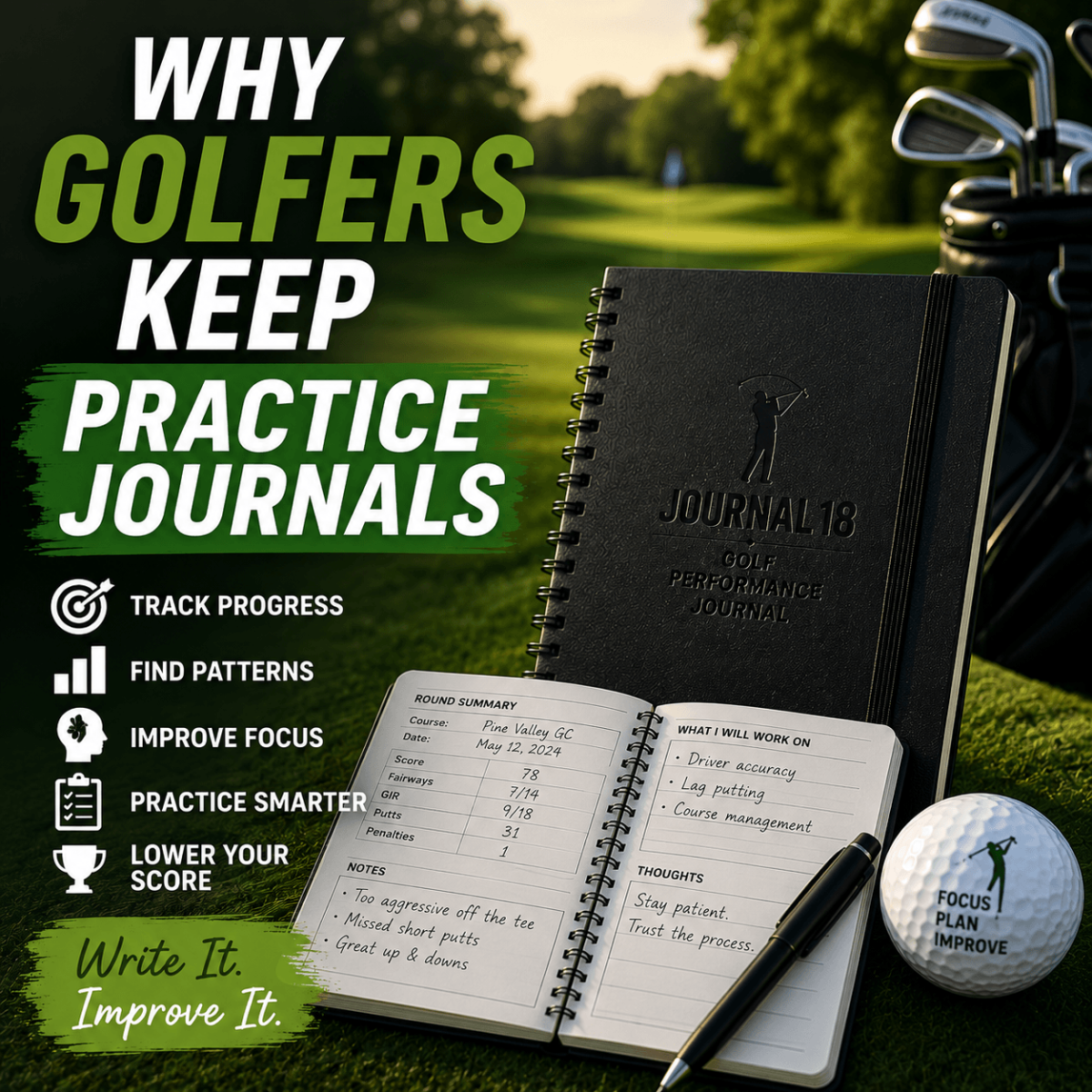
This is where journaling can be helpful. Writing down pressure situations creates awareness and helps turn emotional moments into useful lessons.
Read more: why golfers keep practice journals.
How Journal18 Helps Build Confidence
Journal18 can help golfers track performance, pressure moments, practice goals, and mental game notes. This makes it easier to see progress and prepare for similar situations in future rounds.
If you are comparing options, see our guide to the best golf performance journals.
Simple Mental Routine Before Pressure Shots
Use a simple routine before important shots. Keep it short enough to repeat under pressure.
| Step | Action | Purpose |
|---|---|---|
| 1 | Choose a clear target | Directs attention away from fear |
| 2 | Take one slow breath | Reduces tension |
| 3 | Use one swing cue | Prevents overthinking |
| 4 | Commit to the shot | Builds trust |
| 5 | Accept the result | Helps reset for the next shot |
Want a Better Way to Track Pressure Situations?
If you want one place to track rounds, pressure moments, confidence notes, and practice goals, Journal18 may be worth considering.
Check Current Journal18 OfferFinal Thoughts
Staying calm under pressure in golf is a skill. It improves through routines, smarter decisions, breathing control, realistic expectations, and consistent reflection.
Start with one simple pre-shot routine and review your pressure moments after each round. Over time, you can build more confidence and make better decisions when the round matters most.
View Current Journal18 DealsFAQ
Why do I get nervous in golf?
Golf creates nerves because there is time to think between shots, and golfers often focus on score, mistakes, or outcomes.
How do I stop overthinking under pressure?
Use one clear target, one swing cue, and a repeatable pre-shot routine instead of adding multiple technical thoughts.
How can I stay calm over short putts?
Focus on your routine, start line, and speed. Avoid thinking about the result while standing over the ball.
Can a golf journal help with pressure?
Yes. A journal can help you review pressure situations, identify patterns, and create better routines for future rounds.
Disclosure: This page may contain affiliate links. We may earn a commission at no extra cost to you. Product availability, pricing, and offers may change at any time. This content is for informational purposes only and is not the official Journal18 website.
.png)

.png)
.png)